

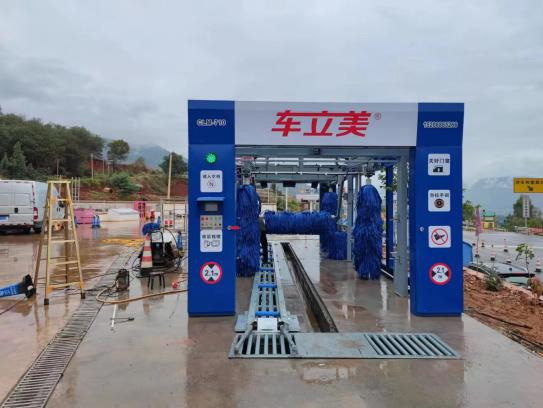
Tunnel Car Wash Machine | High-Volume Conveyor Wash System
Before requesting a quotation
- Wash-bay dimensions and access route
- Vehicle types and expected washes per day
- Local voltage, frequency and water conditions
- Required wash process and optional functions
Quick Answer
A tunnel car wash is designed for projects that need a continuous vehicle flow rather than one machine washing one stationary vehicle at a time. Vehicles move through a planned sequence of pre-wash, chemical application, brush or high-pressure cleaning, rinsing, wax and drying modules. The correct tunnel length, module combination and conveyor arrangement must be designed around the site, target vehicles, required wash packages and expected operating volume.
When a Tunnel Car Wash Makes Sense
- The business expects sustained traffic and needs vehicles to enter the wash in sequence.
- The site has enough length for the wash tunnel, entrance queue, exit area and equipment room.
- The operator wants several service packages using selectable wash, wheel, wax and drying stages.
- A trained team can perform daily inspection, cleaning and preventive maintenance.
For a compact bay or lower starting volume, compare touchless rollover models and five-brush rollover systems before choosing a tunnel layout.
How the Tunnel Wash Process Is Planned
- Vehicle entry and guidance: confirm queue space, driver instructions and safe conveyor loading.
- Pre-wash: loosen sand and heavy surface contamination before the main cleaning stages.
- Chemical application: select the required shampoo or foam process according to the local wash program.
- Main cleaning: configure brush modules, high-pressure modules or a combined process according to the project.
- Wheel and lower-body cleaning: confirm whether wheel brushes, high-pressure wheel cleaning or chassis washing are required.
- Rinse, wax and drying: match the final stages to the target service level and local climate.
These stages describe the planning logic, not a promise that every function is standard. The final included modules must be listed in the approved configuration and quotation.
Configuration Points to Confirm
| Project item | Why it matters | Information needed |
|---|---|---|
| Conveyor and vehicle flow | Controls loading, spacing and continuous operation | Vehicle mix, queue plan and operating method |
| Wash modules | Changes cleaning process, tunnel length and maintenance | Required pre-wash, brush, pressure, wheel and chassis functions |
| Drying system | Affects exit quality, electrical load and tunnel space | Target drying result, climate and available power |
| Water and chemicals | Influence cleaning consistency and operating preparation | Water analysis, flow, pressure and selected chemical process |
| Control and safety | Coordinates the conveyor, modules and operator response | Attended or unattended plan, local interfaces and safety requirements |
| Service access | Reduces maintenance difficulty and downtime risk | Equipment-room position, side access and spare-parts storage |
Site and Utility Checklist
A tunnel project needs more than the machine footprint. The layout should include the entrance queue, driver guidance, conveyor loading zone, full tunnel, equipment room, drainage, maintenance routes and a safe exit. Confirm:
- Clear building length, width and height, including doors and structural columns
- Largest vehicle dimensions and the intended range of passenger vehicles
- Electrical voltage, frequency and available capacity
- Water flow, pressure, quality, storage and recycling requirements
- Drainage, sludge handling and local environmental requirements
- Ambient temperature, ventilation, dust, rainfall and freezing conditions
- Container unloading route, installation access and maintenance clearance
Use the automatic car wash installation checklist before civil work starts. Foundation and embedded work should follow the approved project drawing.
Capacity Should Be Calculated, Not Assumed
Tunnel throughput depends on conveyor speed, vehicle spacing, wash-module timing, entrance control, selected service package and operator workflow. A headline vehicles-per-hour number is not enough for project planning. Zhike should calculate the proposed operating range only after the process and layout are confirmed.
What International Buyers Should Compare
- Exact included modules and optional functions
- Approved vehicle envelope and conveyor loading rules
- Electrical, water, air and drainage responsibilities
- Foundation drawing, installation guidance and commissioning scope
- Consumables, routine wear parts and recommended spare-parts package
- Packing, shipment documents, training and after-sales communication
For quotation comparison, read the automatic car wash project cost-factor guide. Compare project scope and responsibilities rather than one headline equipment amount.
Information Needed for a Tunnel Layout
Send the country and city, dimensioned site drawing, entrance and exit route, maximum vehicle size, expected daily and peak-hour traffic, required wash packages, local voltage and frequency, water information, drainage plan and climate conditions. If a building already exists, include door, column and equipment-room positions.
Send your project details for a tunnel car wash layout review.
After-Sales Planning
Before ordering, use the automatic car wash after-sales support checklist to confirm warranty scope, installation responsibilities, training, documentation and model-matched spare parts in writing.
Water Supply and Recycling Planning
Before finalizing the site, use the automatic car wash water requirements and recycling guide to confirm the water source, supply stability, test results, storage, drainage, reclaimed-water stages and final-rinse needs.
FAQ
Is a tunnel system always better than a rollover machine?
No. A tunnel is most useful when the site, traffic and operating team support continuous flow. A rollover machine can be more practical for a compact site or lower starting volume.
How many vehicles can a tunnel wash per hour?
The operating range must be calculated from the conveyor speed, vehicle spacing, selected modules and wash package. It should not be promised before the project layout is confirmed.
Can the tunnel use brushes and high-pressure water together?
A combined process can be discussed. The final module sequence depends on the desired cleaning result, available tunnel length, utilities and maintenance plan.
What should be confirmed before civil construction?
Confirm the approved layout, foundation and drainage drawings, equipment-room arrangement, utility points, vehicle route and installation access before construction.
Does Zhike provide one fixed tunnel configuration for every country?
No. Voltage, frequency, climate, water, vehicle mix, operating process and local project responsibilities must be reviewed for the destination market.